

What to Expect From a Professional Engine Bay Detail
Why Engine Bay Cleaning Makes People Nervous
You have probably heard that water and engines do not mix. Friends, family, maybe even a mechanic warned you at some point. And they are not entirely wrong. Careless engine bay cleaning can absolutely cause problems. Sensors get wet. Connectors short out. Warning lights appear. Cars stall.
So when someone suggests getting your engine bay detailed, your first thought might be: is this even safe?
That worry makes sense. The engine compartment is full of electronics, sensors, and components that do not respond well to water sprayed without care. But here is what most people do not realize. Professional what to expect from engine bay detailing is nothing like hosing down your engine at a self-serve car wash. A trained detailer approaches the job differently. They know what to cover, what to avoid, and how to clean without causing the problems you are worried about.
At Kleen Whips Auto Detailing in Bel Air, we handle engine detail process work as an optional upgrade to our signature detailing service. We clean the built-up dirt, dust, grease, and grime that accumulates over time. We dress and protect the plastic and rubber components so they look new. And we do it without putting your vehicle at risk.
This article walks you through exactly what happens during a professional engine bay detail, step by step, so you know what to expect before you book.
What Actually Happens During the Engine Detail Process
The engine detail process starts before any cleaning product touches your engine. A professional detailer begins by assessing what they are working with.
Initial Assessment
Every engine bay is different. Some are relatively clean with just a thin layer of dust. Others have years of road grime, oil residue, and debris packed into every crevice. The detailer looks at the overall condition, identifies areas of heavy buildup, and notes any components that need extra protection or should be avoided entirely.
This assessment shapes how the rest of the job goes. A newer car with light dust gets handled differently than a ten-year-old vehicle that has never had its engine cleaned.
Covering Sensitive Components
Before any water or cleaner touches the engine bay, certain areas get covered or taped off. This is where engine bay safety starts.
Components that typically get protection include:
- The air intake and filter housing
- Exposed electrical connectors
- Fuse boxes and relay panels
- Alternator openings
- Distributor caps (on older vehicles)
- Any exposed sensors or wiring harnesses that could trap water
The goal is to keep water and cleaning products away from areas where they could cause problems. Plastic bags, tape, and specialized covers create barriers that let the detailer work confidently on the rest of the engine bay.
Degreasing the Surfaces
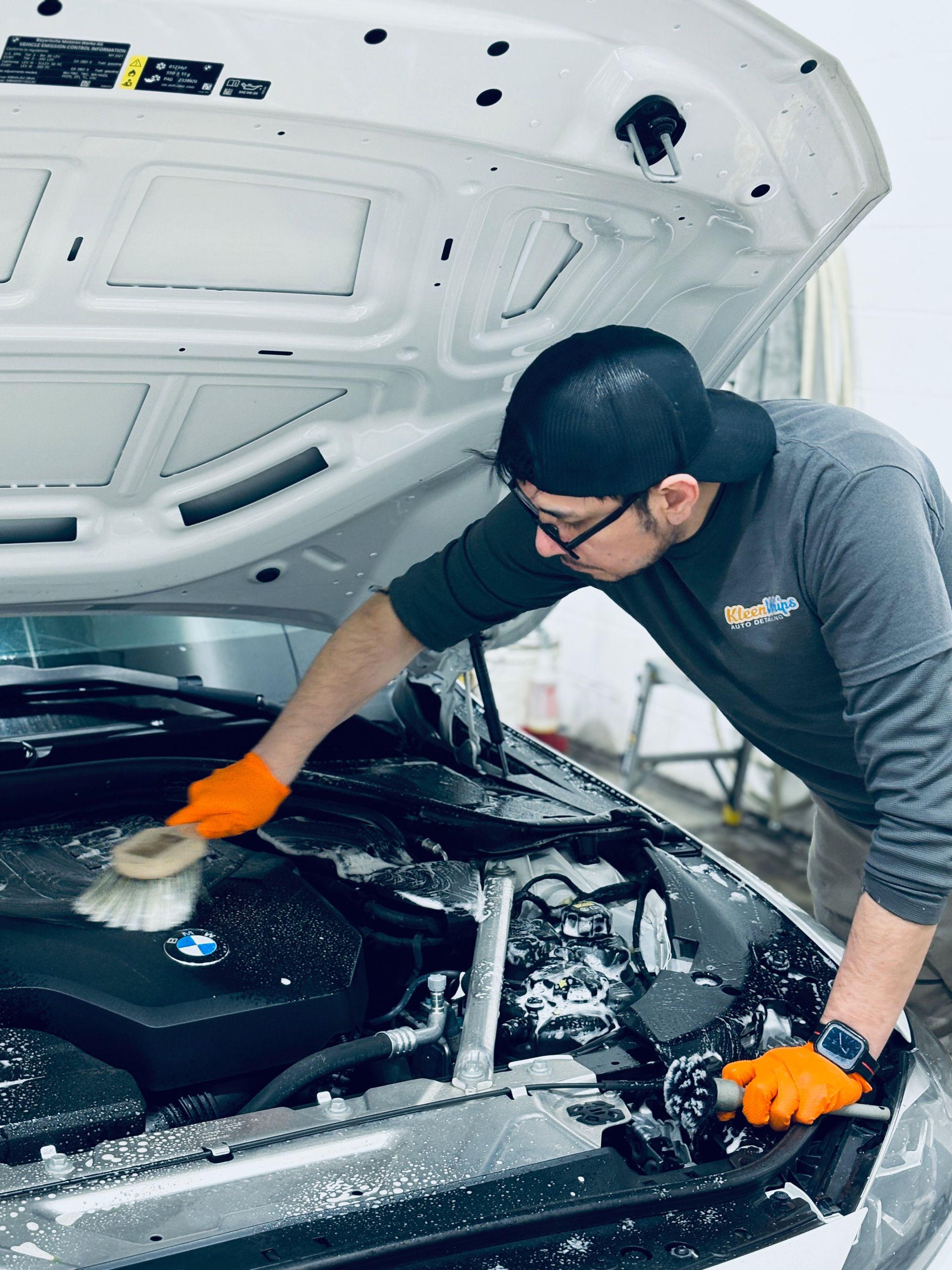
With sensitive areas protected, the degreasing begins. A professional uses cleaning products designed for automotive engine bays. These cut through oil, grease, and road grime without damaging plastic, rubber, or painted surfaces.
The degreaser gets applied to the dirtiest areas first. The detailer lets it dwell for a bit, giving it time to break down the buildup. Heavily soiled spots might get some agitation with a brush to loosen stubborn grime. The brushes used are appropriate for the surfaces involved, nothing that would cause damage.
Rinsing With Control
Here is where technique matters most. Professional engine cleaning does not involve blasting water at high pressure into every corner of the engine bay. That is exactly the kind of thing that causes problems.
Instead, a trained detailer uses controlled, low-pressure water flow. They rinse strategically, directing water away from the sensitive areas that were covered. They avoid forcing water into places it should not go. The rinse removes the degreaser and the grime it loosened without flooding electrical components.
Some detailers prefer steam cleaning over traditional rinsing. Steam uses less water overall and can be even more controlled in how it is directed.
Drying the Engine Bay
Drying is not optional. Leaving water sitting in the engine bay is asking for trouble. A professional uses compressed air to blow water out of cracks, crevices, and anywhere it might pool. This step is thorough. Water hiding behind covers or under components gets forced out.
After the air blowout, the detailer confirms that no standing water remains. Some shops let the engine run briefly to generate heat and evaporate any remaining moisture. Others use additional drying methods depending on the situation.
Sands of Time
Button
What Gets Cleaned During Under Hood Detailing
The scope of under hood detailing covers all the accessible surfaces in the engine compartment. Here is what a professional typically addresses.
Plastic Covers and Shrouds
Modern engines are often covered by plastic engine covers. These tend to collect dust and can look faded over time. Cleaning and dressing these covers makes a noticeable difference in how the engine bay presents.
Hoses and Rubber Components
Coolant hoses, vacuum lines, and other rubber components accumulate grime and can look dull or gray. Cleaning removes the buildup. Dressing restores their appearance and provides some UV protection against future fading.
The Firewall and Fender Wells
The firewall (the wall separating the engine from the cabin) and the inner fender areas catch road spray and debris. These surfaces often hold the heaviest buildup and benefit most from thorough cleaning.
The Engine Block and Valve Covers
Where accessible and appropriate, the engine itself gets attention. Oil residue, dust, and grime on the engine block and valve covers are addressed carefully.
The Battery and Battery Tray
Corrosion around battery terminals is common. Cleaning this area and protecting the terminals is part of a proper engine bay detail.
Accessory Components
Things like the alternator bracket, power steering reservoir, and brake fluid reservoir get cleaned as their surfaces allow. Again, the approach is careful and controlled.
How Professionals Handle Engine Bay Safety
Engine bay safety is not just about covering components. It is about understanding the risks and having a process that accounts for them.
Understanding What Tolerates Moisture and What Does Not
Not every electrical component is equally vulnerable. Some connectors are sealed and designed to withstand moisture. Others are exposed and sensitive. A professional knows the difference. They handle each component appropriately rather than applying the same approach everywhere.
Using Appropriate Water Pressure
High-pressure water is the enemy here. A pressure washer aimed into your engine bay can force water past seals and into places it should not reach. Professional detailers use low-pressure rinsing or steam. The goal is removing grime, not blasting it.
Avoiding Direct Water Contact With Specific Components
Even with protective covers in place, detailers avoid directing water at certain areas. The air intake is a prime example. Water in the air intake can cause serious engine damage. Professionals keep their rinse pattern away from these critical areas entirely.
Confirming Dry Before Finishing
The job is not done until the engine bay is dry. Compressed air removes water from hidden spots. The detailer checks and rechecks that no moisture remains pooled anywhere.
What Your Engine Bay Looks Like When Finished
After a professional detail, the engine bay looks noticeably different from how it arrived.
Clean, Defined Surfaces
The grime that made everything look uniformly gray or brown is gone. Individual components stand out. You can actually see what you are looking at under the hood.
Dressed and Protected Plastics
Plastic covers and rubber hoses look refreshed, not faded. The dressing applied during the detail provides some protection against UV degradation and makes the surfaces easier to clean going forward.
No Greasy Buildup
Oil residue that had accumulated around the engine, valve covers, or other areas is removed. The surfaces look cleaner and stay cleaner longer because that sticky layer is gone.
Professional Presentation
For some vehicle owners, the visual result matters. Whether you are showing your car, selling it, or just take pride in keeping it maintained, a clean engine bay reflects how you care for your vehicle overall.
Who Benefits From Engine Bay Detailing
Not everyone needs their engine bay detailed regularly. But certain situations make it worthwhile.
Owners Who Take Pride in Presentation
If you keep your vehicle's interior and exterior detailed through professional detailing services, the engine bay is the last piece. It completes the picture. Some owners want every part of their vehicle looking its best.
Vehicles for Sale
A clean engine bay makes an impression when selling. Buyers lift the hood. What they see influences their perception of how well the car was maintained. A grimy engine bay raises questions. A clean one supports your asking price.
Classic or Show Cars
For vehicles that will be judged or displayed, engine bay presentation matters. Combined with proper paint correction and exterior work, a professional engine bay detail prepares the entire vehicle for inspection.
After Fluid Leaks or Spills
If you had a coolant leak, power steering fluid spray, or any other fluid issue repaired, cleaning the affected area afterward makes sense. Old fluid residue attracts dirt and looks neglected.
Routine Maintenance for Accessibility
A clean engine bay makes it easier to spot new leaks or problems when they occur. Mechanics appreciate working on a clean engine. And you can see what you are doing if you check your own fluids.
Why Professional Cleaning Is Different From DIY
You might be tempted to clean your engine bay yourself. And for some people with experience, that is possible. But here is why professional engine cleaning offers advantages.
Knowledge of Component Sensitivity
A professional knows which components need protection and which can handle cleaning. Without that knowledge, you risk making expensive mistakes. Replacing a sensor or dealing with electrical issues is far more costly than paying for professional detailing.
Proper Equipment
The right brushes, degreasers, dressings, and drying equipment make a difference. Professionals have these tools and know how to use them. Improvising with household products can damage finishes or leave residue.
Controlled Technique
The difference between safe engine cleaning and damaging cleaning often comes down to technique. Water pressure, spray direction, dwell time for products, and drying thoroughness all matter. A trained detailer has practiced these skills across many vehicles.
Accountability
A reputable shop stands behind their work. If something goes wrong, you have recourse. If you cause a problem cleaning your own engine bay, that repair is entirely on you.
What Engine Bay Detailing Does Not Include
Understanding the scope helps you know what to expect.
Mechanical Repairs
If your engine has a leak, that needs mechanical attention. Detailing cleans the visible results of leaks. It does not fix them. Get repairs done first, then detail the bay to clean up afterward.
Internal Engine Cleaning
This service addresses external, visible surfaces. It is not a mechanical flush of your cooling system, fuel system, or anything internal.
Impossible Stains
Some staining is permanent. Years of neglect or certain types of damage may not be fully reversed. A detail makes significant improvement, but it will not undo everything.
Schedule Your Engine Bay Detail
Give your engine bay the same attention as the rest of your vehicle. Our engine bay detail cleans built-up dirt, dust, grease, and grime from accessible surfaces. We dress and protect the plastic and rubber components so they look and last better. And we do it with the care and technique that keeps your vehicle safe.
Ready to see the difference? Book an appointment and add the engine bay upgrade to your next detail.
Frequently Asked Questions
Is it safe to have water near my engine?
Water near your engine is not automatically dangerous. Modern engines encounter moisture regularly, from rain, puddles, and humid conditions. The issue is careless cleaning that forces water into sensitive components. A professional detailer uses low-pressure rinse techniques, covers vulnerable parts, and avoids directing water where it should not go. They also dry the bay thoroughly with compressed air before considering the job complete. When done correctly, the risk is minimal. Problems arise when someone sprays a pressure washer at full force into uncovered electrical connectors or forces water into the air intake.
How often should I get my engine bay detailed?
For most vehicles, once or twice per year is plenty. Some owners detail their engine bay with every major exterior detail. Others do it annually or before selling the vehicle. The frequency depends on how dirty your engine bay gets and how much presentation matters to you. If you drive in dusty conditions, have an oil leak that was recently fixed, or want to keep your engine bay consistently presentable, more frequent cleaning makes sense. If you simply want to maintain appearances periodically, an annual detail works fine.
Will engine bay cleaning void my warranty?
Professional engine bay detailing should not void your warranty. Manufacturers expect vehicles to be cleaned and maintained. Problems would only arise if cleaning caused actual damage, which proper technique avoids. Dealerships themselves often clean engine bays before selling certified pre-owned vehicles. If you are concerned, ask your dealership directly. Most will confirm that external cleaning of the engine bay, done appropriately, is not a warranty issue. The key is the technique used, not the fact that cleaning occurred.
What is the difference between engine detailing and steam cleaning?
Both approaches accomplish the same goal of cleaning the engine bay. Traditional detailing uses degreasers and a low-pressure water rinse. Steam cleaning uses heated steam to loosen grime, requiring less water overall. Steam can be more controlled in tight spaces and leaves less residual moisture to dry. Some detailers prefer steam. Others prefer traditional methods. Both work when done properly. The choice often depends on the equipment available and the detailer's experience with each method. Either approach, in skilled hands, produces a clean engine bay without damaging your vehicle.
Can I add engine bay detailing to any service?
At Kleen Whips Auto Detailing, engine bay detailing is offered as an optional upgrade to our detailing packages. You can add it to any interior and exterior detailing service we provide. The upgrade cleans accessible engine bay surfaces and dresses the plastic and rubber components. If you want your engine bay addressed during your appointment, let us know when booking. We will include it in the service plan. The goal is to give your engine bay the same attention as the rest of your vehicle.