
How to Choose the Right Window Tint Shade: A Buyer's Decision Guide
Choosing the right window tint shade can feel overwhelming when you're staring at options like 35%, 20%, or 5% without knowing what they actually mean. This comprehensive buyer's guide breaks down the VLT (Visible Light Transmission) percentage system and helps you make an informed decision based on your specific priorities.
Whether you're focused on maximum privacy, superior heat rejection, sleek appearance, or strict legal compliance in Maryland, this article provides a practical decision framework to match the perfect tint shade to your needs and budget. Learn how different percentages look, how heat rejection works independently of darkness, and how to choose strategically using our simple 5-step selection process.
Understanding What Those Percentage Numbers Mean
You've decided to get window tint, but now you're staring at options like 35%, 20%, 5% and wondering what they actually mean. Here's the simple explanation.
Window tint shade selection comes down to VLT, which stands for Visible Light Transmission. The percentage tells you how much light passes through. A higher number means more light (lighter tint). A lower number means less light (darker tint).
So, 50% tint lets half the light through. 20% tint lets only one-fifth through. 5% tint is very dark, sometimes called "limo tint."
At Kleen Whips Auto Detailing in Bel Air, we help customers understand these numbers by showing actual samples. But first, you need to figure out what matters most to you.
Your Primary Goal Determines Your Best Choice
Different people get window tint for different reasons. Let's break down the main goals.
Privacy Focus: Darker tint in the 20-35% range provides the best privacy. Keep in mind privacy works differently during the day versus night - interior lights make even a dark tint more transparent.
Heat Rejection Focus: Darker doesn't mean better heat rejection. Film type matters more. Ceramic tint at 35% can block more heat than cheap film at 5%.
Appearance Focus: The right darkness depends on your vehicle's color. Darker vehicles often look better with a darker tint.
Legal Compliance Focus: In Maryland, front windows must allow a minimum of 35% VLT. This avoids tickets and hassle.
Know which priority you won't compromise on, then optimize others around it.
Visual Guide to Common Tint Percentages
Here's what to expect at different darkness levels:
- 50% VLT - Very subtle, minimal privacy, legal everywhere in Maryland
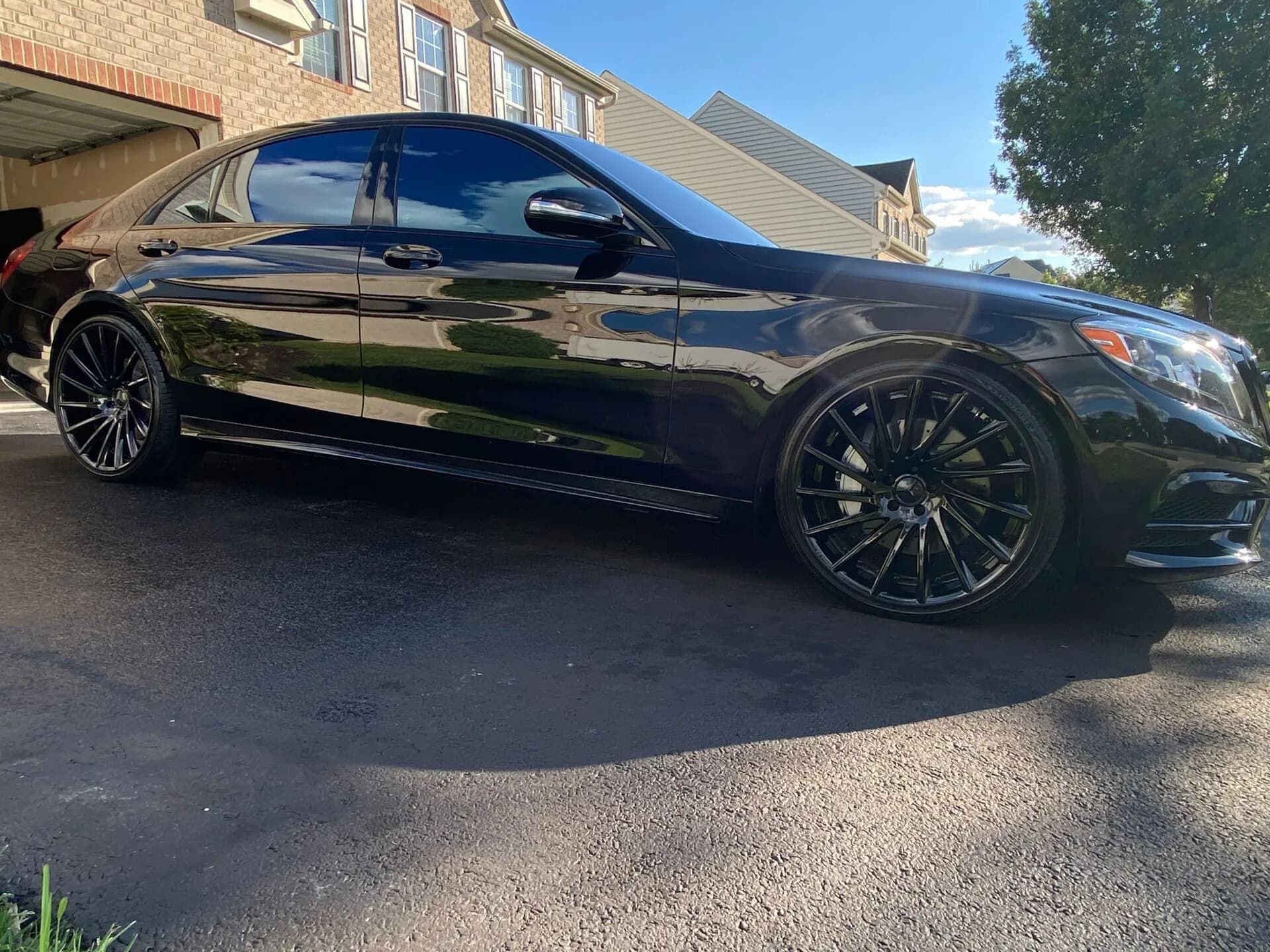
- 35% VLT - Noticeable appearance, moderate privacy, legal on all windows
- 20% VLT - Dark appearance, strong privacy, legal only on rear windows (SUVs/trucks)
- 5% VLT - Very dark "limo tint," maximum privacy, legal only on rear windows (SUVs/trucks)
Maryland law requires 35% VLT minimum on front windows. SUVs and trucks can have any darkness on rear windows, but sedans must maintain 35% on all windows.
Heat Rejection vs. Darkness: They're Not the Same Thing
This is probably the biggest misconception about window tint. People assume a darker tint automatically means better heat rejection. That's not how it works.
Heat comes from infrared radiation, not visible light. Quality ceramic tint blocks infrared rays regardless of how dark it is. Our window tinting options include:
- KAVACA Carbon X - Blocks up to 80% of infrared heat. Available in 5%, 20%, 35%, and 50%.
- KAVACA Ceramic X - Blocks up to 88% of infrared heat. A 35% ceramic tint can keep your car cooler than a 5% dyed film.
- KAVACA Ceramic IR - Blocks up to 96% of infrared heat. Maximum heat rejection at any darkness level.
The takeaway? Choose your darkness based on privacy and appearance. Choose your film type based on heat rejection. These are separate decisions.
How Vehicle Color Affects Tint Appearance
The same tint percentage looks different on different colored vehicles. Understanding this helps you make a choice you'll be happy with long-term.
Dark Colored Vehicles (Black, Dark Blue, Dark Gray)
- Darker tint blends naturally
- 20% or darker creates a cohesive look
- 35% still looks good, but less dramatic
Light Colored Vehicles (White, Silver, Light Gray)
- Medium tint (35%) creates nice contrast
- A very dark tint can look too extreme for some
- 35-50% range typically looks most balanced
Bold Colored Vehicles (Red, Yellow, Blue)
- Medium tint (35%) tends to complement best
- A very dark tint can clash with vibrant colors
Looking at samples on your specific vehicle in different lighting conditions helps make the right choice. What looks perfect in shade might seem too dark in direct sunlight.
Making Your Final Selection: A Decision Framework
Here's a practical way to narrow down your options and make the right choice:
- Identify Your Must-Have - What's the one thing you absolutely need from your window tint? Privacy? Heat rejection? Legal compliance? Specific appearance? This becomes your baseline requirement that everything else works around.
- Determine Your Legal Limits - In Maryland, front windows need 35% minimum VLT. If you have an SUV or truck, the rear windows can be dark. If you have a sedan, all windows need 35% minimum. These legal boundaries set your available options.
- Choose Your Film Type - Select between carbon and ceramic based on your heat rejection needs. Remember, this decision is separate from darkness. You can get maximum heat rejection at legal darkness levels with the right film.
- Select Your Shade - Within your legal options, choose the darkness level that matches your privacy and appearance preferences. If legal compliance is your must-have, you're choosing 35%. If maximum privacy is your must-have and you have an SUV, you might choose 5% or 20% for rear windows.
- See Samples on Your Vehicle - Before committing, view physical samples on your actual vehicle in real lighting conditions. Photos and descriptions only go so far. Seeing the tint on your specific car color in both sunlight and shade makes the decision clear.
Ready to Choose the Perfect Window Tint?
Now you understand how VLT percentages work, how heat rejection differs from darkness, and how to match tint to your specific goals. The right shade exists for your needs, whether that's maximum privacy, superior heat rejection, perfect appearance, or strict legal compliance.
Ready to make your choice? Contact Kleen Whips Auto Detailing and we'll show you samples on your actual vehicle. Seeing the different shades in real lighting on your specific car makes the decision clear. We'll help you select the perfect combination of darkness and film type for exactly what you need.
Frequently Asked Questions About Window Tint Shade Selection
What's the most popular window tint percentage?
The most popular choice is 35% VLT on all windows because it's the darkest legal option for front windows in Maryland and creates a uniform appearance. This shade provides good privacy during the day, noticeable heat reduction, and stays within legal limits. Many customers choose 35% front windows with darker rear windows on SUVs and trucks for additional privacy.
Does a darker tint block more heat than a lighter tint?
Not necessarily. Heat rejection depends on the film type, not the darkness. Ceramic tint at 35% can block more infrared heat than cheap dyed film at 5%. Our KAVACA Ceramic IR blocks up to 96% of infrared heat, whether you choose 35% or darker shades. The darkness controls privacy and visible light, while the film composition controls heat rejection.
Can I go darker than 35% on front windows in Maryland?
No, Maryland law requires front side windows to allow at least 35% visible light transmission. Going darker is illegal and can result in tickets during traffic stops. Officers use tint meters to measure VLT on the spot. However, SUVs and trucks can have any darkness on rear windows, and all sedans need 35% minimum on all windows.