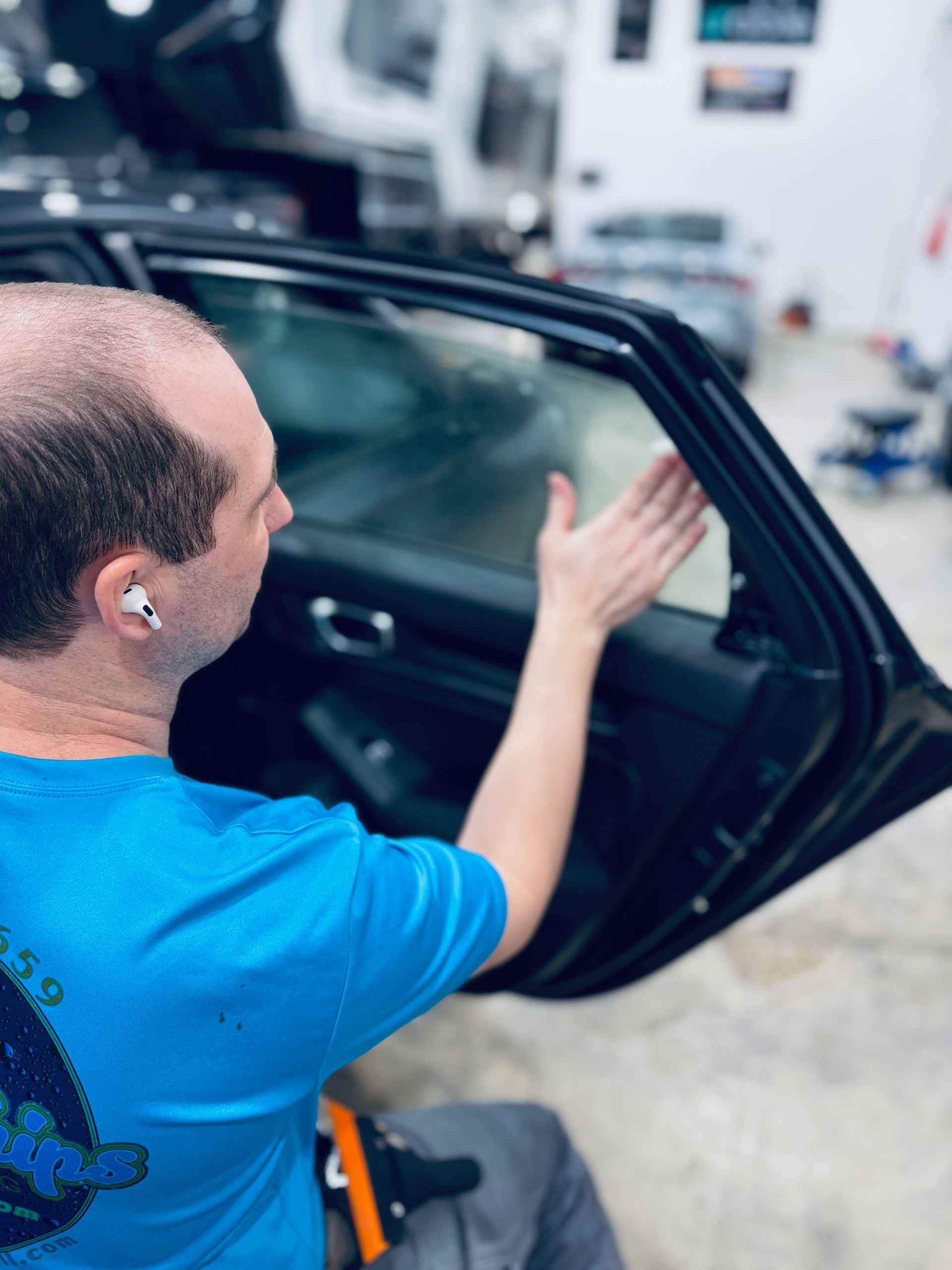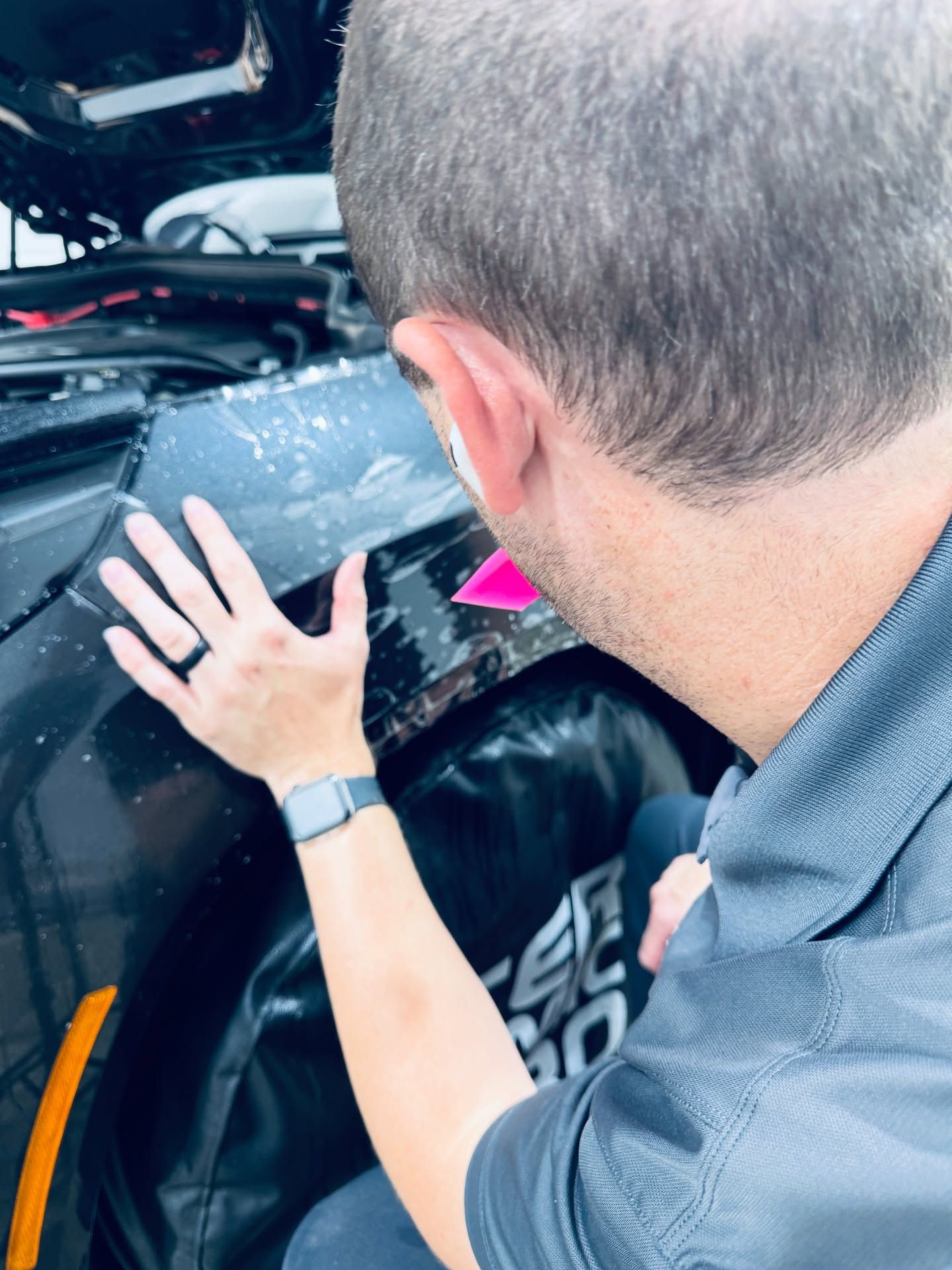


The Question Every First-Time Customer Asks
You've seen the signs for auto detailing but never actually booked one. Maybe you've always just hit the car wash and called it good. So when someone mentions a full detail, the natural question comes up: what is included in a full auto detail, and why does it cost more than running through the tunnel?
Fair question. A full detail isn't just a longer car wash. It's a methodical process that addresses your vehicle inside and out, hitting areas that automatic washes don't touch and using techniques that actually improve your paint rather than just rinse it.
At Kleen Whips Auto Detailing in Bel Air, we walk customers through this all the time. Let's break down what happens during a professional detail so you know exactly what you're paying for.
Starting Outside: The Exterior Process
The exterior portion of a full detail involves multiple stages, each building on the last. This isn't spray and wipe. It's systematic.
Pre-Rinse and Initial Wash
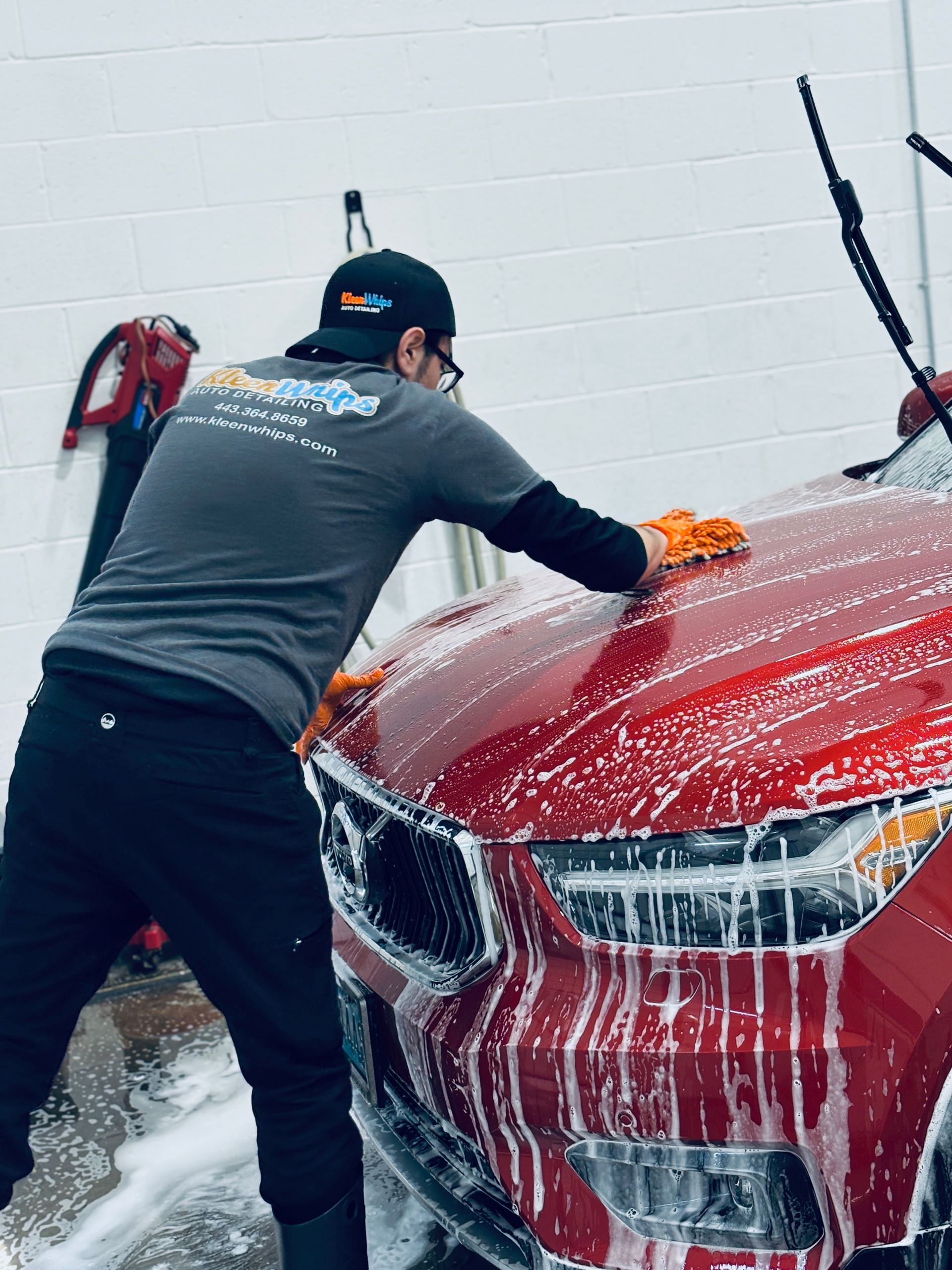
Everything starts with getting the loose dirt off. A thorough rinse removes surface debris before anything touches your paint. Then comes a hand wash using proper techniques that lift contamination rather than grinding it into the surface. This alone differs from automatic washes, where spinning brushes drag dirt across your paint repeatedly.
Wheel and Tire Cleaning
Wheels get individual attention with brushes designed to reach between spokes, behind lips, and into lug nut wells. Brake dust bakes onto wheels over time and doesn't come off with a regular rinse. Tires get scrubbed to remove the brown oxidation that builds up, preparing them for dressing later.
Decontamination
Here's something most car owners don't realize happens. After washing, your paint still has bonded contamination stuck to it. Industrial fallout, rail dust, tree sap residue, and overspray all bond to clear coat at a microscopic level. A clay treatment pulls these contaminants off, leaving the surface genuinely smooth. Run your hand across the paint afterward and you'll feel the difference immediately.
Paint Correction (When Included)
Some full details include light paint correction to address swirl marks and light surface imperfections. This uses machine polishing to level the clear coat and restore clarity. Not every detail includes this step, so ask what level of paint correction is part of your service if paint improvement matters to you.
Protection Application
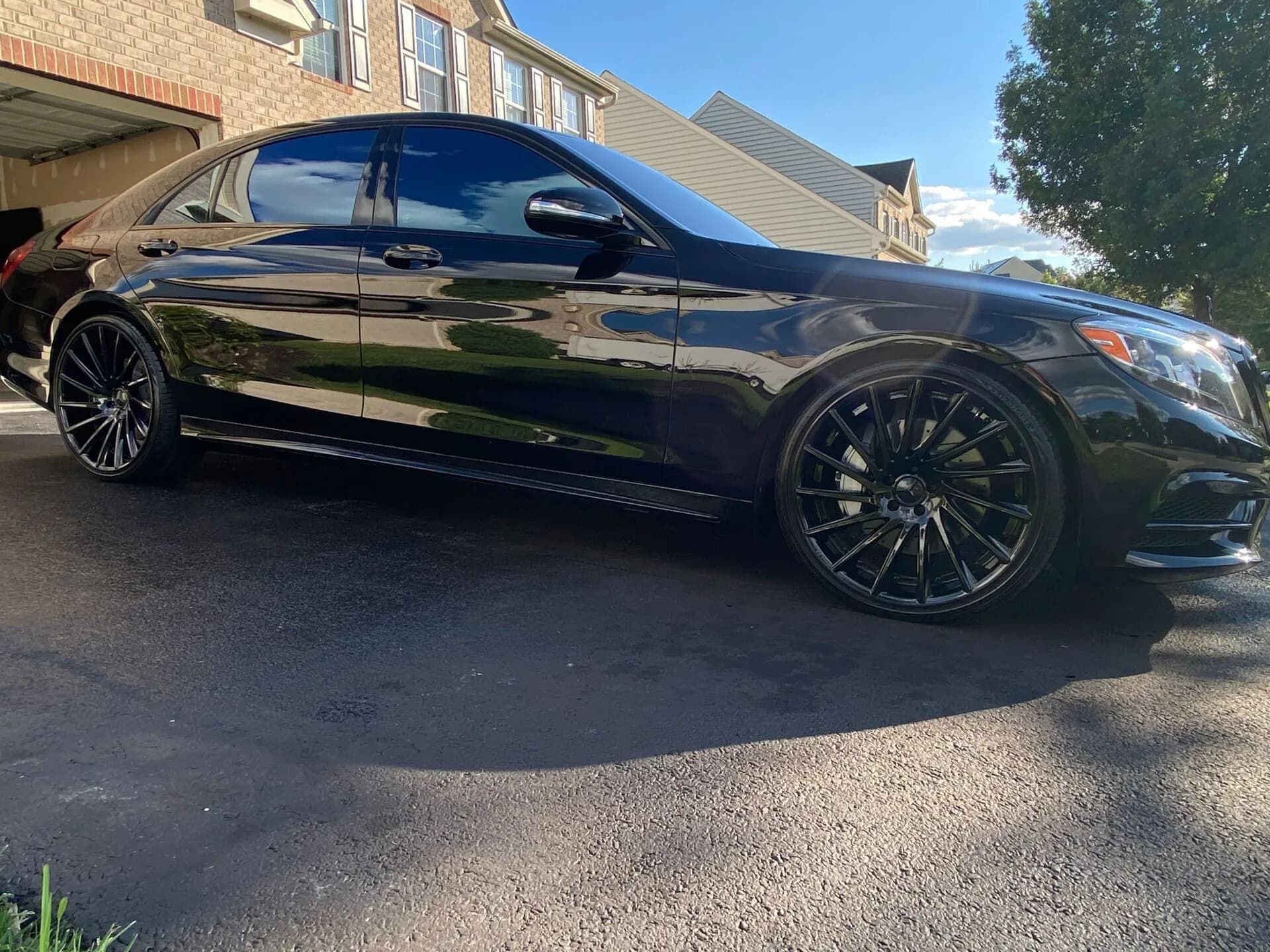
Once the paint is clean and corrected, protection goes on. This might be a sealant, a wax, or a coating depending on the service level. The goal is creating a barrier between your paint and the environment. This step gives you that slick feel and water beading behavior that makes your car look freshly detailed for weeks afterward.
Exterior Details Most People Miss
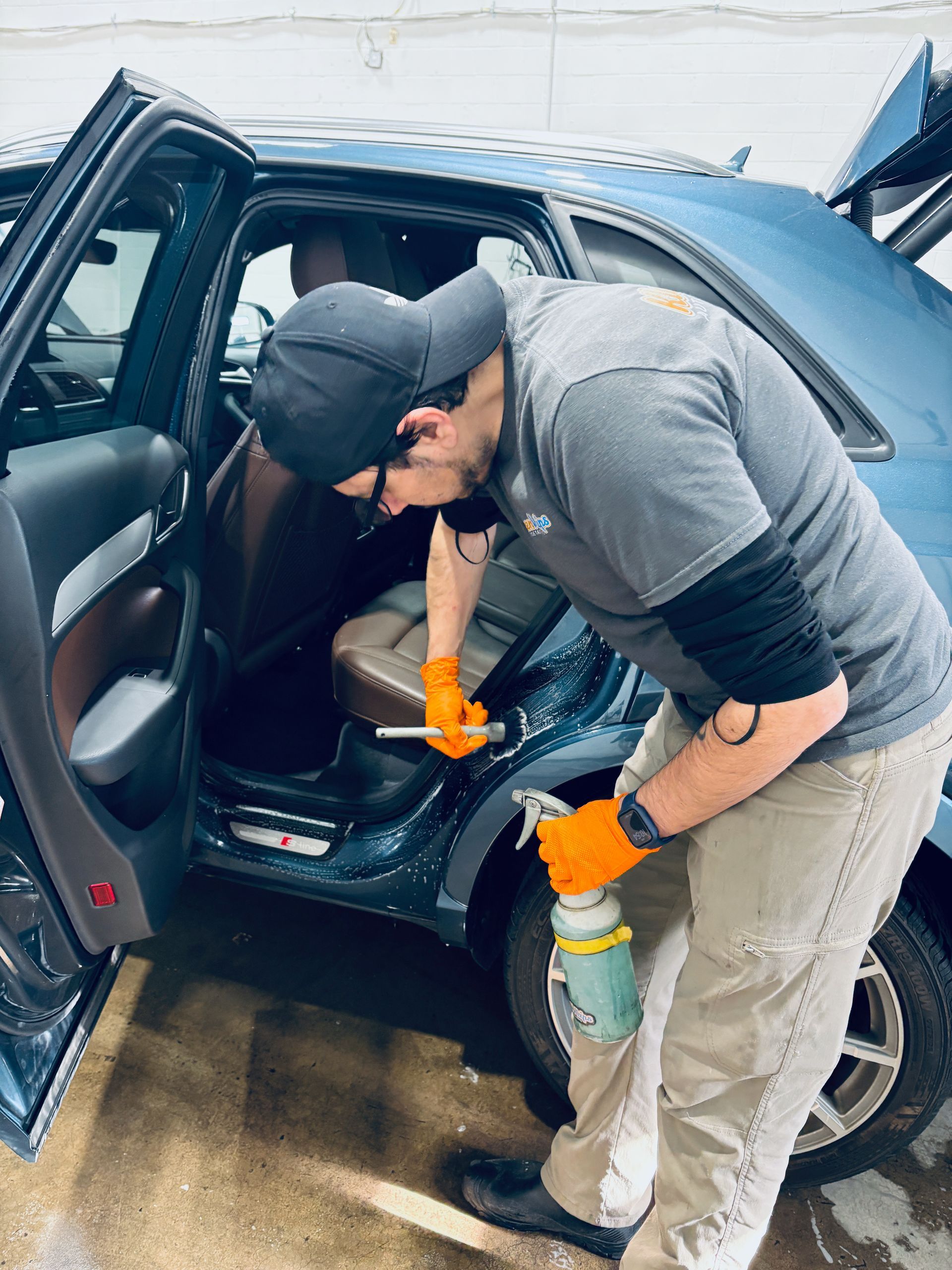
A proper detail hits areas you probably never clean yourself. Door jambs get wiped down to remove grime that accumulates every time you open the door. The fuel door and gas cap area get attention. Emblems and badge edges get cleaned where dirt loves to hide. Window trim, rubber seals, and wiper arms all get addressed. These small touches separate a detail from a wash.
Moving Inside: The Interior Process
Interior detailing takes as much time and attention as the exterior, sometimes more.
Thorough Vacuuming
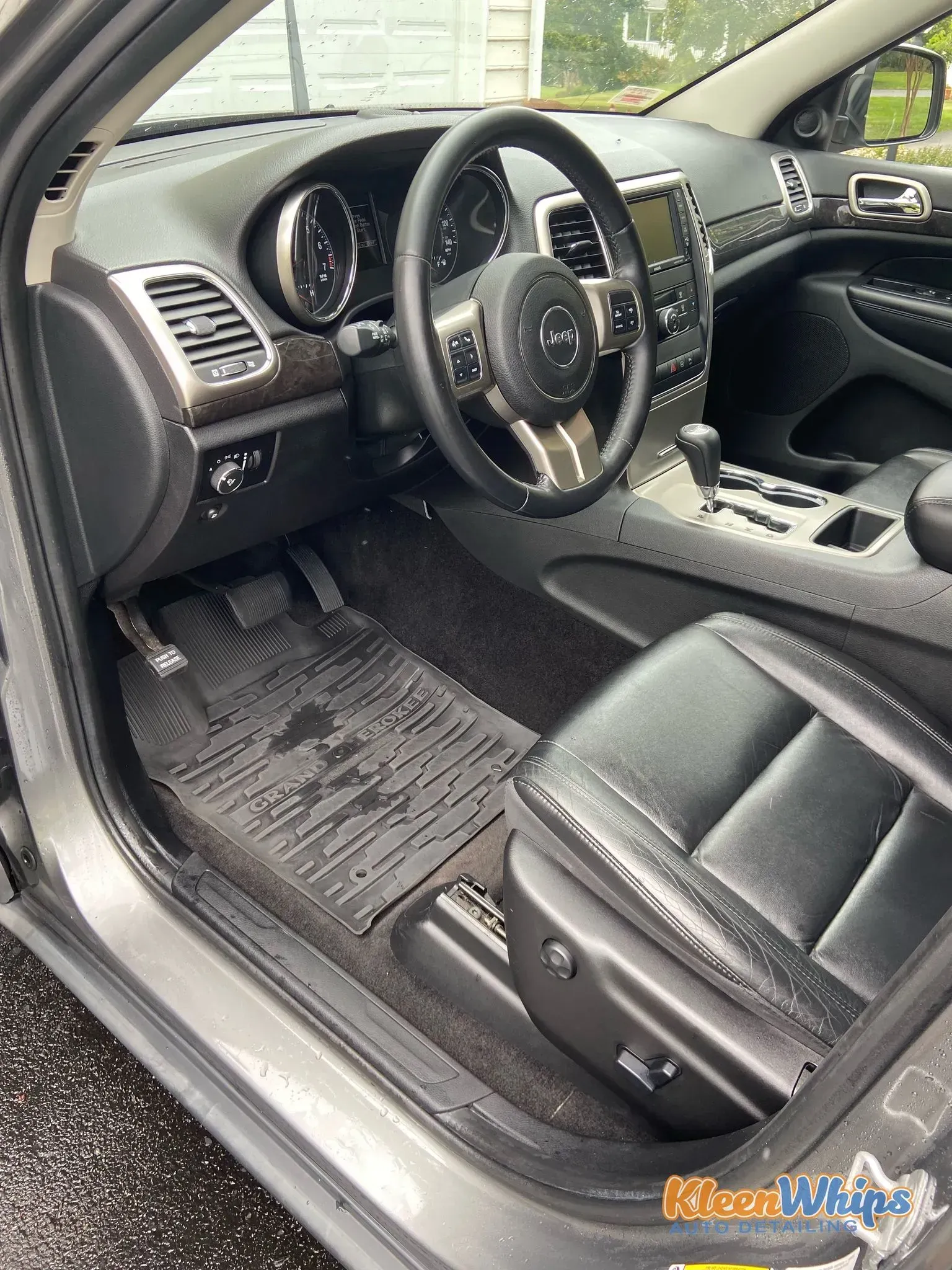
This goes beyond running a vacuum across the floor mats. Seats get vacuumed in the seams where crumbs collect. The area under seats and between the console gets attention. Trunk areas get emptied and vacuumed.
Surface Cleaning
Hard surfaces like the dashboard, console, door panels, and steering wheel get cleaned with appropriate products. A good detailer knows what each surface requires. This removes the film that builds up from skin contact and dust accumulation.
Leather Care
Leather seats need conditioning to stay supple and prevent cracking. Cleaning removes surface dirt. Conditioning replenishes oils that keep leather from drying out.
Carpet and Upholstery
Fabric seats and carpets get shampooed when necessary. Stains get treated. The goal is removing embedded dirt that vacuuming alone doesn't reach.
Glass Cleaning
Interior glass gets properly cleaned to remove the haze from off-gassing plastics. Clean windows from the inside make a bigger difference than most people expect.
The Details Inside the Details
Air vents get cleaned between the slats. Cup holders get scrubbed. The headliner gets attention if dirty. Door pockets get wiped. Seat belt buckles get cleaned. These touches matter.
Final Steps: Dressing and Inspection
Tire Dressing
Tires get a dressing that restores their natural dark appearance. This conditions the rubber and gives them a clean, maintained look.
Trim Restoration
Exterior plastic trim fades from UV exposure. A proper detail addresses this with products that restore darkness and protect against further fading.
Final Inspection
Before your car leaves, a quality shop does a walk-around inspection. Windows get checked for streaks. Surfaces get inspected for missed spots. This catches anything that needs correction before delivery.
How This Differs from a Car Wash
The difference comes down to time, technique, and attention. A car wash takes minutes. A full detail takes hours. A car wash uses automated equipment that can damage paint over time. A detail uses hand techniques chosen to clean without harming surfaces.
Car washes remove loose dirt. Details remove bonded contamination. Car washes rinse your mats. Details address every surface you touch.
What You Should Expect When You Pick Up
After a full detail, your vehicle should look noticeably different. Paint should feel smooth and look glossy. Interior surfaces should be clean and conditioned. Glass should be streak-free inside and out.
Check those door jambs. Look at your wheels up close. Run your hand across the paint. A quality
detailing service stands up to inspection because the work actually happened.
Ready to See the Difference?
Now you know what goes into a full auto detail. It's methodical work that requires skill and real time investment.
Curious about professional detailing? Contact Kleen Whips Auto Detailing to discuss what service level fits your needs. We'll explain exactly what's included before you commit.
Frequently Asked Questions About Full Auto Detailing
How long does a full auto detail take?
A full detail typically takes several hours depending on vehicle size and condition. Larger vehicles and those with heavy soiling require more time. The process can't be rushed without cutting corners. When booking, ask for a time estimate based on your specific vehicle and its current condition. This helps you plan your schedule and sets appropriate expectations for the work involved.
How often should I get my car detailed?
Most vehicle owners benefit from a full detail two to four times per year, with regular maintenance washes between services. Your driving habits, parking situation, and local environment all affect how quickly your vehicle accumulates contamination. Vehicles parked outdoors or driven daily in harsh conditions may need more frequent attention. Interior cleaning frequency depends on how often passengers enter and exit.
What's the difference between interior detail and full detail?
An interior detail focuses only on cabin surfaces, including vacuuming, surface cleaning, leather care, carpet treatment, and glass cleaning. A full detail includes everything done to the interior plus complete exterior service: wash, decontamination, paint correction if included, protection application, and all the exterior details like wheels, trim, and door jambs. Full details address your entire vehicle comprehensively.